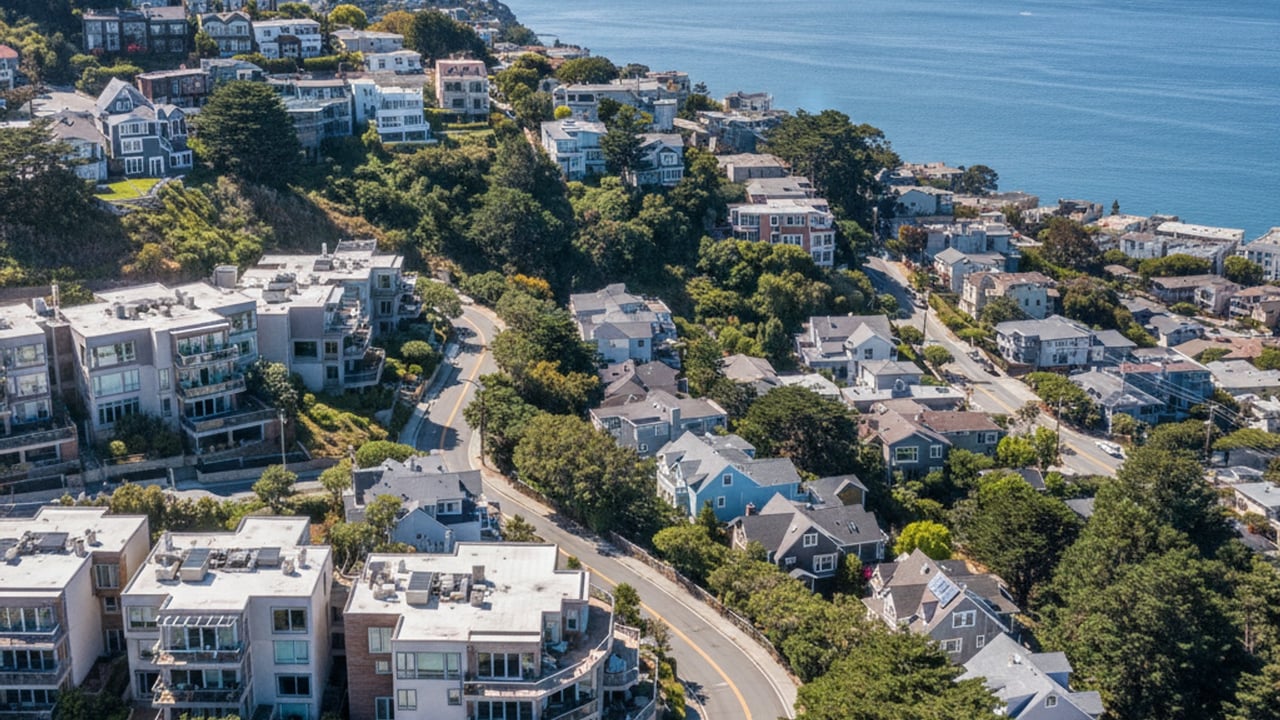
The median sale price in Mill Valley, CA, sits around $3,227,500 as of mid-2026. That number gets a lot of attention, but what often catches first-time buyers in Mill Valley off guard is everything else they need to bring to the closing table on top of the down payment.
Closing costs cover the administrative, legal, and financial steps required to transfer property ownership. Knowing what's in that stack of fees - and roughly how much it'll add up to - means you're not scrambling to move cash around the week before escrow closes.
What Are Closing Costs?
A real estate transaction pulls in a lot of professionals: appraisers, title officers, escrow holders, lenders. The fees you pay all of them are your closing costs.
These expenses are due on the day you sign your final paperwork. They're separate from the ongoing costs of owning the home - your monthly mortgage payment, utilities, property tax installments after the fact. Think of them as the one-time price of admission.
Closing Costs vs. the Down Payment
The down payment is the portion of the purchase price you pay upfront. It goes straight toward your equity in the property.
Closing costs are on top of that. You'll need to fund both to complete the purchase, and they don't offset each other. Buyers sometimes budget carefully for one and forget to fully account for the other.
Buyer vs. Seller Responsibilities
Both parties pay for things at closing, but they're paying for different services. Buyers generally cover the costs tied to securing a mortgage and establishing their ownership record. Sellers typically handle the real estate agent commissions and fees related to clearing whatever debt is still on the property.
The exact split on title and escrow fees depends on local county customs - and in Marin County, that's worth understanding before you make an offer.
How Much Buyers Pay in Mill Valley
Buyers typically pay between 2% and 3% of the purchase price in closing costs. On a median-priced $3,227,500 home in Mill Valley, that's roughly $64,550 to $96,825.
The final number depends on your loan type, your lender, and the property taxes due at closing. Cash buyers land at a lower percentage because they skip all the mortgage-related origination and underwriting fees entirely.
Average Percentages
A 3% estimate gives most mortgage borrowers a safe buffer. That percentage scales directly with the purchase price, which matters a lot when you're in a market where the median is north of $3 million.
Lenders are required to provide a Loan Estimate within three days of a mortgage application. That document spells out the projected percentages and dollar amounts for your specific deal - it's the closest thing to a real number you'll get before closing.
Why Costs Differ in the San Francisco Bay Area
Property values in Marin County push up the dollar amount of any percentage-based fee - title insurance and escrow services being the obvious ones. A fee that's a rounding error in a lower-cost market becomes a meaningful line item here.
Local transfer taxes also vary by municipality. Mill Valley and Marin County both levy specific documentary transfer taxes, and those show up on your final settlement statement.
Sample Closing Costs by Purchase Price
Mill Valley's median price clears $3 million, but walking through standard price tiers shows how the math scales. A $300,000 property generates very different fees than a $600,000 one - and the same 2% to 3% rule applies across all of them.
Example Breakdown by Price Tier
On a $300,000 home, expect closing costs between $6,000 and $9,000. A $400,000 property bumps that to $8,000 to $12,000. A $500,000 purchase typically runs $10,000 to $15,000. At $600,000, you're looking at $12,000 to $18,000.
The pattern is consistent. What changes is how much those percentages mean in dollar terms at Mill Valley price points.
Calculating Your Specific Costs
Multiply your target purchase price by 0.025 for a reasonable middle-ground estimate. It won't be exact, but it gives you a working number before you have a lender in the picture.
Once you apply for a mortgage, the Loan Estimate is your most accurate tool. It breaks out each fee by category so you can see exactly where the money is going.
Breaking Down the Buyer's Bill
The final closing disclosure is a long document. Most of the line items fall into a handful of categories, and once you understand those buckets, the whole thing becomes easier to read.
Some fees go to your lender. Others go to third-party service providers. Some go straight to local government. Knowing the difference also helps you spot anything that looks off.
Loan and Lender Fees
Lenders charge origination and underwriting fees to process your mortgage application - compensation for evaluating your credit and structuring the loan. You'll also pay for a home appraisal, which the lender requires to confirm the property's value. The appraisal fee is often paid upfront rather than rolled into the final closing day balance.
Title Insurance and Escrow Fees
Title insurance protects against past defects in the property's ownership record. If you're taking out a mortgage, you're required to purchase a lender's title policy.
Escrow fees cover the neutral third party managing the funds and paperwork. In Marin County, buyers and sellers typically negotiate how to split the escrow fee and the owner's title policy - it's not automatic either way.
Transfer and Recording Taxes
Recording fees are generally a flat rate paid to the county clerk to officially record the new deed. Marin County and the city of Mill Valley also collect documentary transfer taxes, and who pays what is a matter of local custom and negotiation.
Prepaids and Escrow Reserves
Lenders often require you to fund an escrow account for future property taxes and homeowners insurance - they want those funds available when the bills come due. You'll also pay upfront interest covering the days between your closing date and the start of your first full billing cycle.
Who Pays What: Buyer or Seller?
Northern California follows regional customs on who covers what, but every fee is technically negotiable in the purchase contract. Buyers and sellers spell out their respective responsibilities in the initial offer, and those agreed-upon terms drive the final settlement statements.
Customary Buyer Fees
Buyers pay for mortgage origination, the appraisal, and the lender's title insurance policy. Prepaid property taxes and homeowners insurance premiums are also the buyer's responsibility, along with any costs tied to buyer-requested property inspections.
Customary Seller Fees
Sellers typically pay the real estate agent commissions for both sides of the transaction, along with any outstanding property taxes or municipal liens on the home. In many Marin County transactions, sellers also pay for the owner's title insurance policy - though that can vary by agreement.
Seller Contributions
A seller can agree to cover a portion of the buyer's closing costs through seller concessions, which reduces the cash you need to bring to closing. Lenders cap how much a seller can contribute - usually between 3% and 6% of the purchase price, depending on the loan type.
Estimating Your Total
Running the numbers early in the house-hunting process is worth the fifteen minutes it takes. Waiting until you're under contract to think about closing costs is how buyers end up surprised at the worst possible moment.
A thorough estimate factors in average local tax rates and standard lender fees alongside the purchase price.
Using a Calculator
A California closing cost calculator uses the home's purchase price and loan details to generate an estimate, accounting for average local tax rates and standard lender fees. Inputting a $3,227,500 purchase price will yield a very different result than a statewide average, so adjusting the inputs for Mill Valley specifically is worth the extra step.
Cash Purchase Estimates
Cash buyers avoid lender origination fees, appraisal requirements, and mortgage insurance, which brings the total closing cost percentage down meaningfully. That said, you still pay for title insurance, escrow services, and government recording fees. For a cash purchase, expect closing costs to land closer to 1% of the sale price.
Ways to Reduce Your Out-of-Pocket Expenses
Homes in Mill Valley spend roughly 9 days on the market as of mid-2026 - this is not a place where you have a lot of leverage. With 94.4% of homes selling above list price, the options for managing closing costs exist, but they require some trade-offs.
Seller Concessions
Requesting a credit from the seller to offset your closing costs is one approach. In a market where the average sale-to-list ratio is 113.9%, sellers don't need to offer concessions to attract buyers. That doesn't mean it's impossible, but you'll want to think carefully about whether asking for a credit puts your offer at a disadvantage.
Lender Credits
You can accept a higher interest rate in exchange for lender credits that cover a portion of your closing costs upfront. It reduces the cash you need at closing but increases your monthly mortgage payment - and costs you more over the life of the loan. Whether that trade makes sense depends on how long you plan to keep the mortgage.
Negotiating Fees
Government taxes are fixed - you're not shopping those. But you do have the right to compare prices on certain third-party services, including title insurance and escrow providers. Getting Loan Estimates from multiple lenders also surfaces differences in origination and underwriting fees that can add up.
Frequently Asked Questions
What percentage of the purchase price should I expect to pay in buyer closing costs in Mill Valley?
Expect to pay between 2% and 3% of the purchase price. On a median-priced $3,227,500 home in Mill Valley, that works out to roughly $64,550 to $96,825. Cash buyers pay a lower percentage because they don't have mortgage-related fees.
Are buyers typically responsible for the Marin County transfer tax, or does the seller customarily pay?
It depends on what's negotiated in your purchase contract. Local customs in Northern California often see sellers covering certain transfer taxes, but the exact split in Marin County is routinely negotiated between the buyer and seller - don't assume it goes one way automatically.
Are there any hidden closing fees or upfront insurance costs specific to buying a home in wildfire-prone areas of Mill Valley?
Yes. Buyers may face higher upfront costs for homeowners insurance. Lenders require you to prepay a portion of your annual premium into an escrow account at closing, and properties in wildfire-prone areas often carry higher insurance premiums to begin with.
Is it realistic to negotiate seller concessions to cover buyer closing costs in the current Mill Valley real estate market?
Generally, no. With homes spending just 9 days on the market and 94.4% selling above list price, sellers rarely need to offer concessions to attract buyers.
At what point in the 30-day escrow process do I actually wire the final funds for my closing costs?
You'll wire the funds just before your closing date. The escrow company will provide the exact final amount and wiring instructions a few days before you sign the final paperwork.
Can I use lender credits to offset my out-of-pocket closing costs on a Mill Valley property?
Yes. Lender credits reduce your upfront cash requirements, and in exchange, the lender charges a higher interest rate on your mortgage.