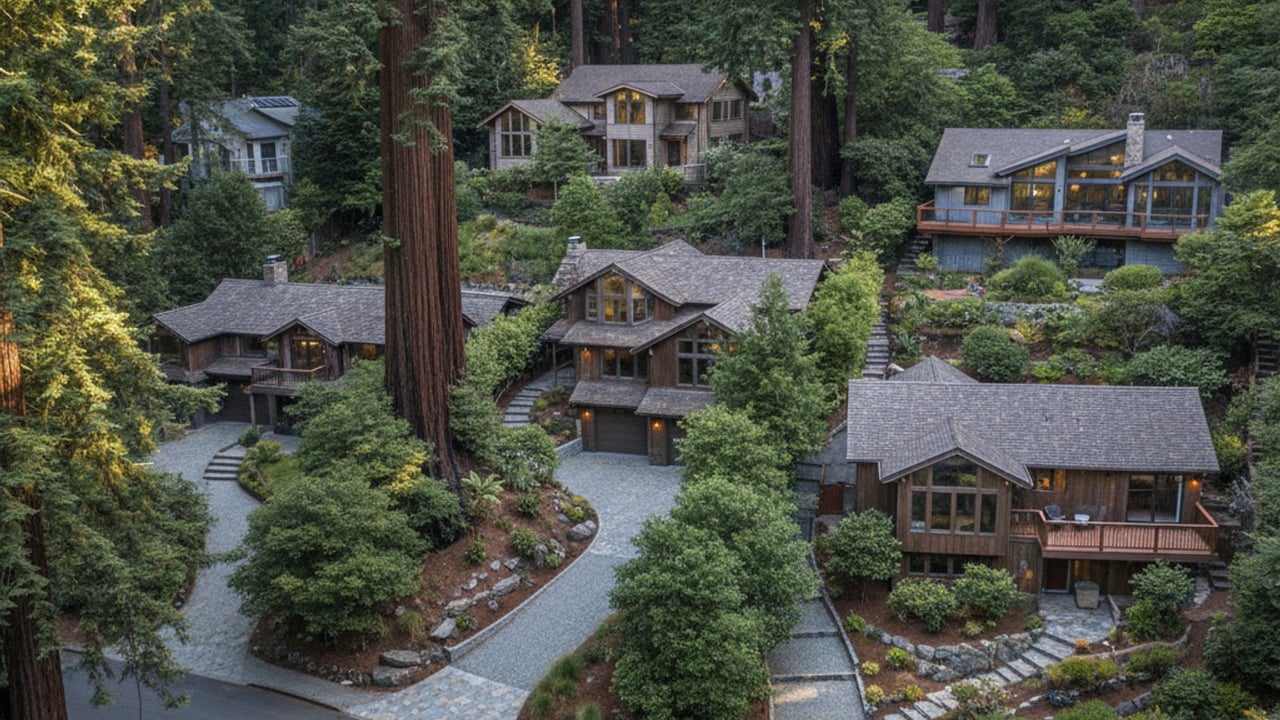
Relocating to Marin County often leads buyers to explore the distinct communities nestled just north of the Golden Gate Bridge. Mill Valley stands out for its immediate proximity to the redwood canopy and its carefully preserved small-town infrastructure. The town offers a specific lifestyle built around outdoor access and architectural integration with the natural landscape.
Originally developed as a logging center and later a summer retreat, the city has evolved into a premier residential market. The local geography dictates much of the daily experience, from the winding residential roads to the distinct microclimates. Buyers moving from urban centers often require a period of adjustment to the heavily forested environment.
Navigating the local housing market requires an understanding of the micro-neighborhoods and commuting realities that define daily life here. Whether you are looking at hillside estates or canyon properties, knowing the terrain is essential for a successful purchase. This guide covers the essential 2026 data, transit options, and community features you need to evaluate living in Mill Valley, CA.
Geography and Outdoor Lifestyle in Mill Valley
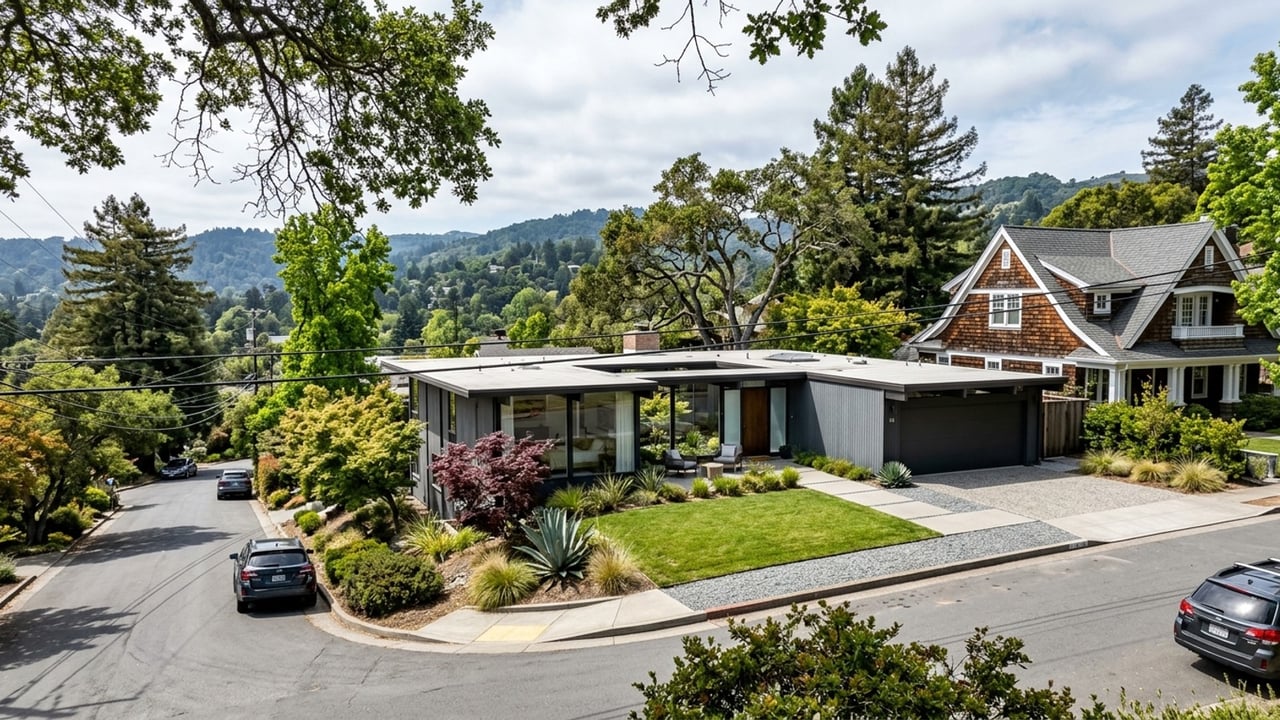
Mill Valley is geographically defined by its position at the eastern base of Mount Tamalpais. The town's layout follows the natural topography, with neighborhoods winding up from the canyon floors into the higher elevations. This varied terrain means property lots are often sloped, integrating homes directly into the dense canopy of Sequoia sempervirens.
Access to outdoor recreation is a foundational part of the local lifestyle. Residents have immediate access to the Marin Headlands and hundreds of miles of established hiking trails throughout Mount Tamalpais State Park. Muir Woods National Monument sits just outside the city limits, providing a globally recognized natural landmark right in the backyard.
The local trail network connects directly to residential streets, allowing residents to hike from their front doors up to the mountain ridges. The Dipsea Trail is a prominent local route that stretches from the downtown core all the way to the Pacific Ocean. This extensive trail infrastructure heavily influences the outdoor-focused culture of the community.
The climate here is heavily influenced by the coastal fog that rolls in from the Pacific Ocean. Mornings and evenings frequently feature a dense marine layer, which typically burns off to reveal a temperate, Mediterranean-style climate by midday. Understanding these microclimates is crucial, as temperatures can vary significantly between the shaded canyon floors and the exposed hillside ridges.
Winter weather brings concentrated rainfall, which transforms the dry summer creeks into active waterways throughout the canyons. The dense tree canopy provides natural shade during the warmer summer months, reducing the need for air conditioning in many older homes. Property owners must actively manage their landscaping to clear defensible space and maintain sunlight access.
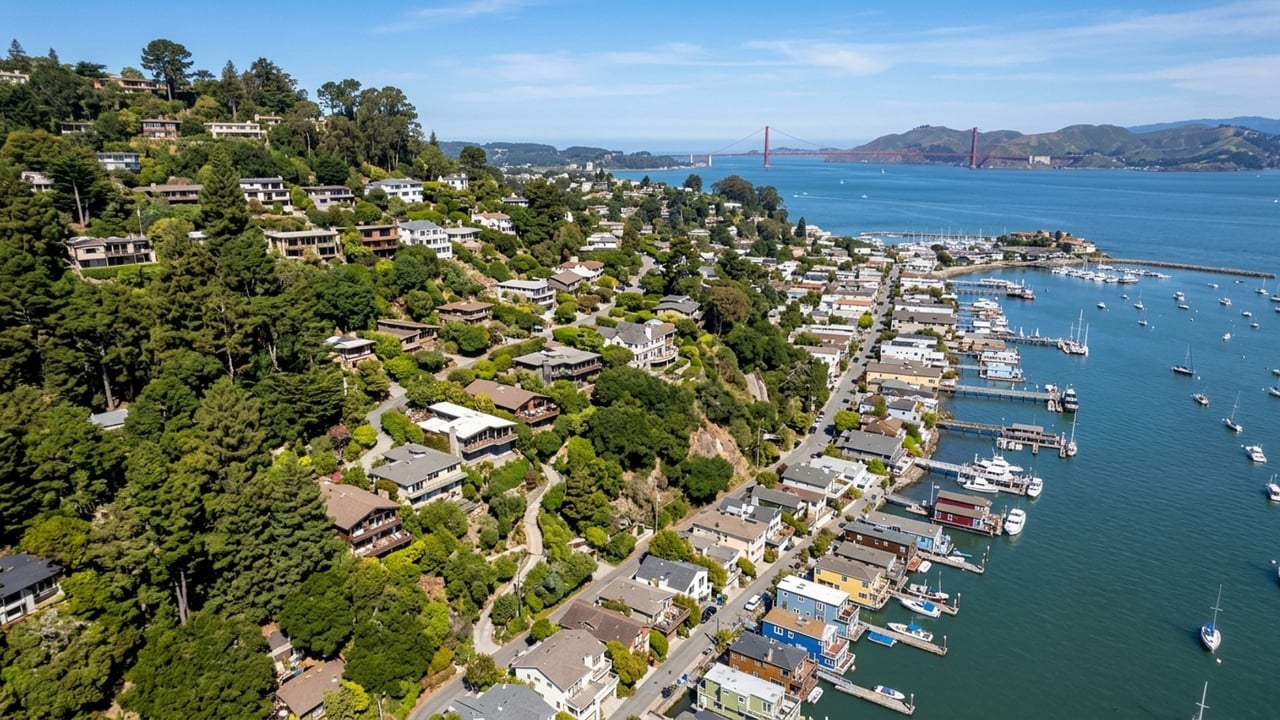
The eastern edge of the city borders Richardson Bay, providing a sharp contrast to the dense forests of the western canyons. This waterfront access allows for kayaking and paddleboarding just minutes from the downtown core. The juxtaposition of marine environments and alpine-like ridges is a unique geographical feature of the area.
The sheer volume of protected green space makes this one of the most visually striking markets in Northern California. However, buyers must be prepared for the realities of maintaining a home in a shaded, heavily forested environment.
Navigating the Mill Valley Real Estate Market
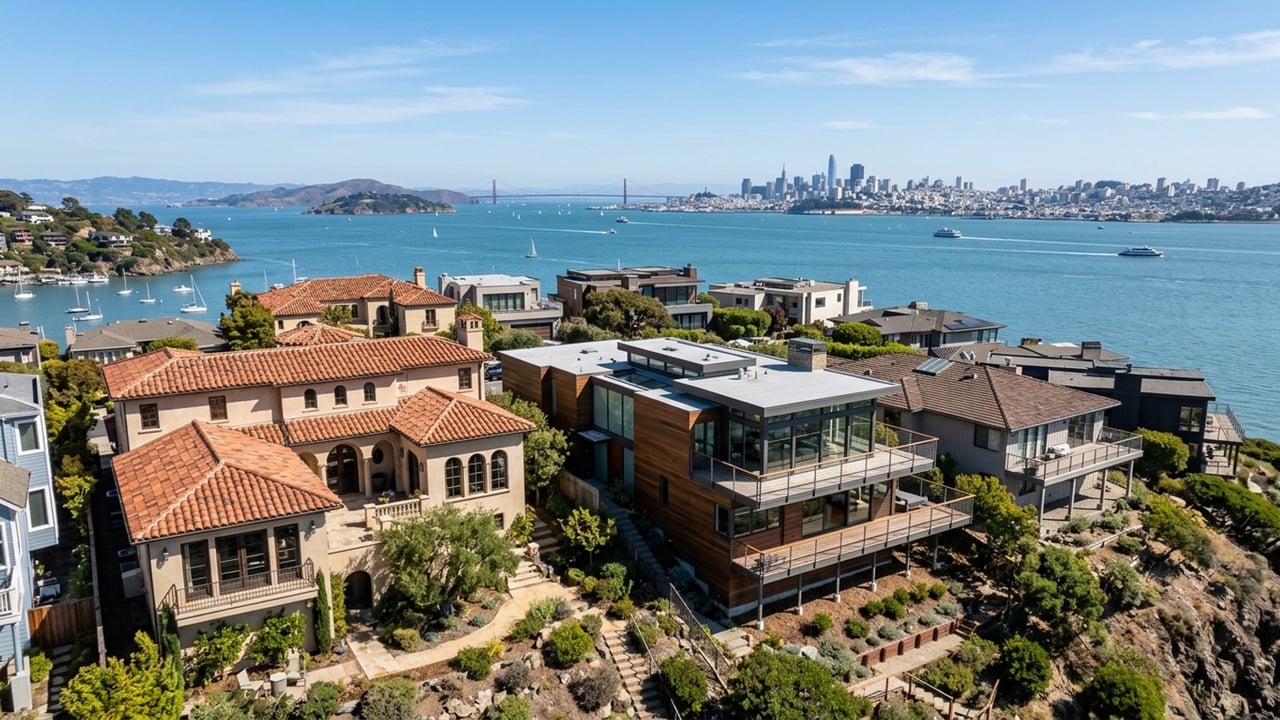
The local housing market is highly competitive and defined by limited inventory. As of early 2026, median home prices hover between approximately $1,845,000 and $1,920,000. Buyers will find a mix of architectural styles, ranging from historic redwood canyon cabins to expansive hillside estates with panoramic views.
Property taxes are a significant factor in the overall cost of ownership here. The local effective property tax rate generally ranges from 1.15% to 1.41% of the assessed value. Additionally, buyers and sellers must account for the city-specific transfer tax rate of $0.275 per $500 of property value when structuring a transaction.
The town is divided into distinct micro-neighborhoods, each offering a different environmental setting. Homestead Valley and Tam Valley offer varying degrees of sun exposure and lot sizes, while Scott Valley features flatter terrain and easier access to main thoroughfares. Choosing the right neighborhood often comes down to balancing your preference for natural light against your desire for woodland privacy.
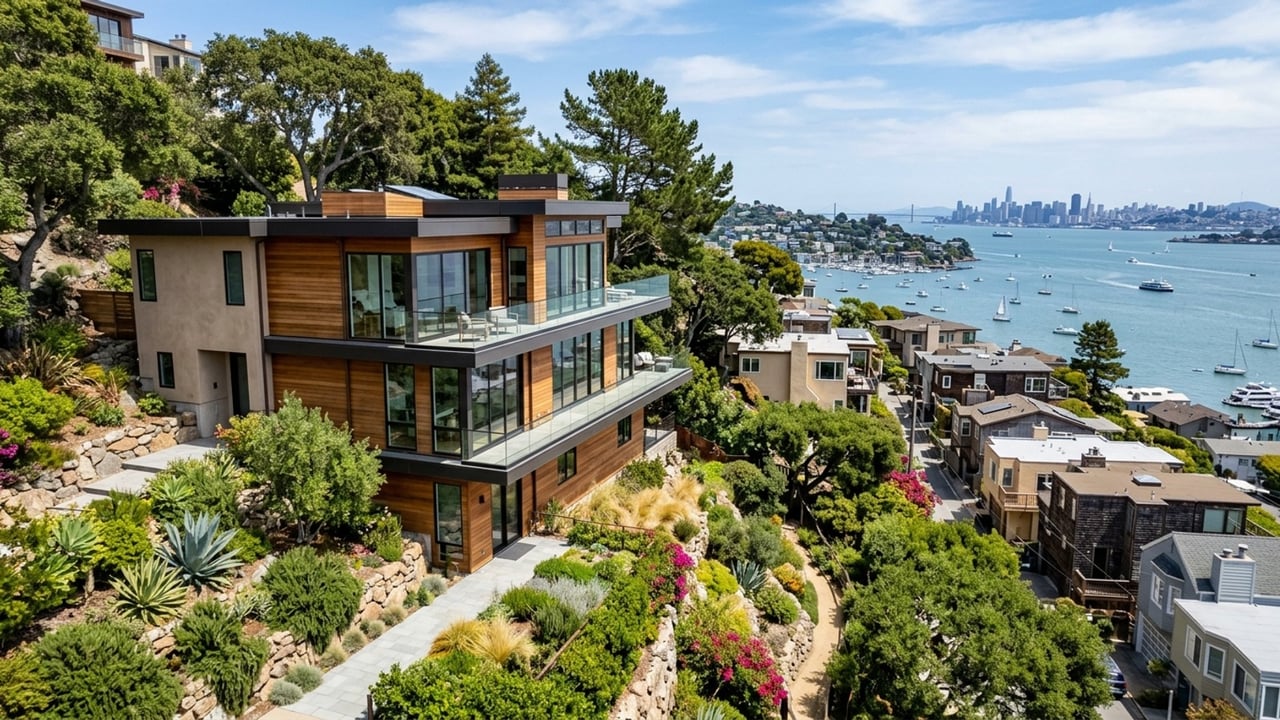
Older homes in the canyon areas frequently require updates, but their historic charm remains highly sought after. Many of these properties began as summer hunting lodges for San Francisco residents before being converted into year-round residences. Buyers should budget for potential foundation or retaining wall inspections when purchasing these older hillside properties.
Parking and lot access are unique challenges in the higher elevations. Many hillside homes rely on street-level parking decks or funicular elevators to reach the main living structures. Navigating the narrow, winding roads requires comfortable driving skills, especially when accommodating local delivery vehicles.
Renovating properties in this market involves navigating strict local zoning and environmental regulations. The city prioritizes the preservation of the redwood canopy, meaning tree removal is heavily restricted and requires specialized permits. Buyers looking to expand a home's footprint must work closely with local architects familiar with the city's design review process.
Securing a home here requires decisive action and a clear understanding of the local transfer taxes. The premium for updated hillside properties continues to climb as inventory remains exceptionally tight.
Commute Times and Transportation Options
For professionals commuting to San Francisco, Mill Valley offers one of the most direct routes in Marin County. The standard drive covers approximately 14 miles via US-101 South and the Golden Gate Bridge. Depending on the time of day, this drive can take anywhere from 25 to 60 minutes.
Traffic congestion heavily impacts the morning and evening commute hours. Off-peak travel is generally smooth, but peak-hour drivers must plan for significant delays approaching the bridge toll plaza. Buyers should test the drive during their actual commuting hours to understand the daily rhythm of US-101.
Carpooling and electric vehicles offer a slight advantage for daily drivers. The highway features dedicated high-occupancy vehicle lanes that bypass some of the heaviest congestion leading up to the bridge. Many local homes are already equipped with electric vehicle charging infrastructure to support this commuting preference.
Marine transit provides a highly utilized alternative to driving. The Golden Gate Ferry operates out of nearby terminals in Sausalito and Larkspur, offering a 30 to 35-minute water travel time to the city. Local bus connections are available to shuttle residents to these terminals, making the ferry a practical daily option.
Many residents prefer the Larkspur terminal for its extensive parking facilities, while the Sausalito terminal is favored for its closer proximity to the southern neighborhoods. Both routes offer a reliable schedule that avoids the unpredictability of highway accidents or bridge closures. The transit infrastructure is well-maintained and heavily subsidized by bridge tolls.
For cycling enthusiasts, the Mill Valley-Sausalito Multiuse Path provides a flat, paved route connecting the two towns. This path runs along the edge of Richardson Bay, offering a scenic alternative for reaching the Sausalito ferry terminal. The local infrastructure heavily supports non-motorized transit for local errands.
The ferry is arguably the most reliable and scenic transit option available. It effectively neutralizes the unpredictability of highway bridge traffic during the morning rush.
Education and Local School Districts
Public education infrastructure is a major consideration for many buyers moving into the area. The city is primarily served by the Mill Valley School District, which manages the K-8 student population. This district operates several distinct campuses integrated directly into the residential neighborhoods.
Specific elementary and middle school campuses located within the city limits include Old Mill School and Edna Maguire School. These facilities are central to the community and often factor into neighborhood selection for incoming buyers. The geographic boundaries for these schools are strict, making address verification an essential step during the house-hunting process.
Old Mill School is particularly notable for its unique setting directly adjacent to Old Mill Park and its towering redwoods. The proximity of these campuses to residential streets encourages walking and biking, reducing local vehicle traffic during morning drop-off hours. The district maintains robust parent involvement and community funding initiatives.
Local property owners contribute to the school district through specific parcel taxes approved by voters. These funds are used to maintain specialized programs in arts, music, and technology across the elementary and middle school levels. The financial support from the community is a defining characteristic of the local educational infrastructure.
For secondary education, the area falls under the Tamalpais Union High School District. This larger district covers southern and central Marin County. The primary local high school campus is Tamalpais High School, which is centrally located and serves the majority of the city's teenage residents.
The high school campus features extensive athletic facilities and specialized academic buildings. Its location near the main commercial thoroughfares allows older students to easily access downtown amenities after school hours. The transition from the localized middle schools to the larger high school environment is a standard progression for local students.
School zone boundaries dictate enrollment in specific elementary campuses across the city. Verifying the exact district lines before making an offer is a mandatory step for any buyer.
Community Amenities and Infrastructure
The commercial core of the city is centered around the downtown Depot Plaza, Miller Avenue, and Throckmorton Avenue. These areas are characterized by preserved historic architecture and a dense concentration of independent retail. Residents have easy access to daily necessities, including boutique grocery stores and local coffee shops.
The Depot Plaza serves as the central gathering point for the community, featuring a brick-paved square and an adjacent independent bookstore. From here, Miller Avenue stretches outward, lined with a mix of professional offices, local eateries, and specialized service providers. The zoning heavily favors independent businesses over large national chains.
The culinary scene focuses heavily on farm-to-table concepts and locally sourced ingredients. Several prominent restaurants operate out of historic buildings, offering high-end dining experiences without the need to travel into San Francisco. The coffee shop culture is equally robust, providing numerous informal meeting spaces for remote workers.
Cultural and entertainment venues play a significant role in the local lifestyle. The Sweetwater Music Hall is a prominent local institution, bringing live music and events directly to the downtown area. This venue anchors the nighttime economy and provides a central entertainment space for the community.
The Mill Valley Public Library is another cornerstone of the community infrastructure. Built directly into the redwood forest edge, the facility offers reading rooms with expansive views of the surrounding canopy. The library hosts regular community events and provides a quiet architectural retreat for residents.
While the town maintains a secluded atmosphere, regional commercial hubs are easily accessible. Major Marin County healthcare facilities and larger retail centers in neighboring Corte Madera are just a short drive up Highway 101. The nearby Strawberry neighborhood also offers a secondary commercial center with grocery anchors and essential services.
The localized commercial zoning along Miller Avenue preserves the town's character. This ensures residents never have to leave the city limits for their daily essentials.
Frequently Asked Questions About Living in Mill Valley
Is Mill Valley an expensive place to live?
Yes, it is one of the higher-priced real estate markets in the San Francisco Bay Area. As of early 2026, median home prices range from roughly $1,845,000 to $1,920,000. Buyers must also factor in local property tax rates of 1.15% to 1.41% and a specific city transfer tax.
What is the weather like in Mill Valley?
The local climate features a distinct coastal fog effect during the mornings and late evenings. By midday, the marine layer typically burns off to reveal a temperate, Mediterranean-style climate. Temperatures and sun exposure vary widely depending on whether a property sits on the shaded canyon floor or an exposed ridge.
What are the commute times like living in Mill Valley?
Driving the 14 miles to San Francisco via US-101 typically takes between 25 and 60 minutes depending on peak traffic conditions. As an alternative, the Golden Gate Ferry from nearby Sausalito or Larkspur offers a predictable 30 to 35-minute water commute. Many residents prefer the ferry to avoid the unpredictability of bridge traffic.