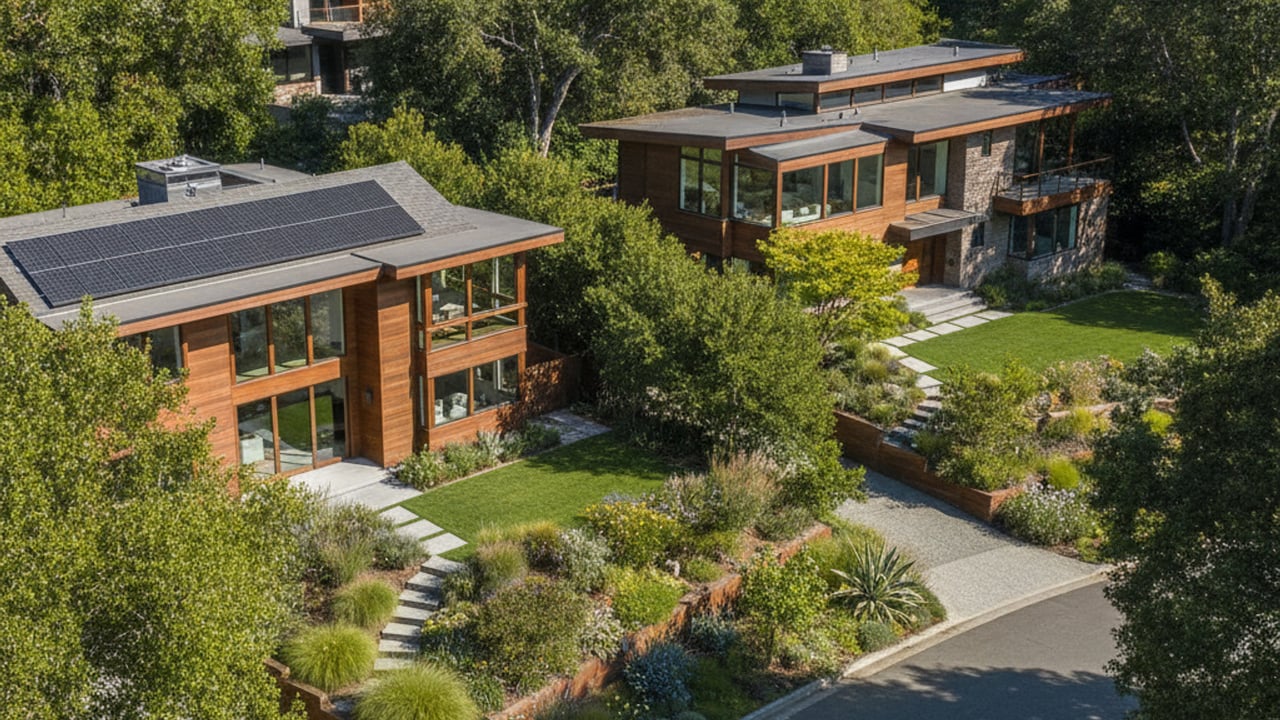
The median sale price for a home in Mill Valley, CA hit roughly $3,227,500 in late spring 2026. Homes are going pending in a median of nine days, and 94% of them close above list price. The average sale-to-list ratio is sitting around 114% - so a home listed at $2.5 million is regularly closing well north of that. In a market moving this fast, knowing your real ceiling before you start shopping isn't just smart for first-time home buyers in Mill Valley; it's the only way to write an offer that gets taken seriously.
Calculating Your Home Buying Budget in Mill Valley
Lenders start with your debt-to-income (DTI) ratio - your gross monthly income measured against your monthly debt obligations. For conventional loans in 2026, underwriters generally allow a DTI up to 50% for borrowers with strong credit. That's the lender's ceiling, not necessarily yours.
Financial advisors tend to recommend something more conservative: the 28/36 rule. No more than 28% of your gross monthly income on housing costs, no more than 36% on total debt. It's a useful sanity check alongside whatever your lender approves.
The 28/36 Rule for Housing Costs
The 28% housing bucket covers mortgage principal, interest, property taxes, and homeowners insurance. If your home has an HOA, those monthly dues go in there too.
The 36% total-debt limit stacks your housing costs on top of auto loans, student loans, and minimum credit card payments. Carry a lot of non-housing debt and your approved mortgage principal shrinks - the lender has to keep your overall DTI within limits regardless of how much you want to borrow.
Factoring in California Income and Local Expenses
California's state income tax brackets will take a real bite out of your paycheck before you ever see it. Lenders approve you based on gross income, but you're living on net - and those aren't the same number here.
Before you let a lender talk you into maxing out your pre-approval, map out what you actually spend each month on groceries, utilities, and commuting. Your comfort level depends on cash flow, not the figure on your approval letter.
Carrying Costs of Buying a Home in Marin County
Property taxes in Marin County typically run an effective rate between 1.0% and 1.25% of the purchase price. Mill Valley, San Rafael, and Novato all fall within that band, though the exact figure depends on local bonds tied to your specific address - two houses on the same street can have different totals.
Under California's Proposition 13, your assessed value starts at the purchase price and can increase no more than 2% per year for as long as you own the home. That gives you predictability on the base tax bill. Special assessments, however, aren't capped the same way and can add to the total.
Property Taxes and California Insurance Realities
Wildfire exposure makes homeowners insurance one of the more serious line items in a Mill Valley budget. According to a 2026 Bay Area insurance analysis, flatland and urban ZIP codes commonly see premiums running $1,200 to $3,200 a year.
For properties in Wildland-Urban Interface (WUI) hillside areas, CalFire's 2025 Fire Hazard Severity Zone maps often push buyers onto the FAIR Plan plus a Difference in Conditions (DIC) policy. Those combined policies on hillside homes run from $4,000 to over $15,000 annually - and that range matters enormously when a lender is calculating how much mortgage you can carry.
HOA Fees and Special Assessments
Some Mill Valley neighborhoods carry additional costs that don't show up on the base tax bill. In master-planned communities throughout Marin County, Mello-Roos Community Facilities District special taxes can add $1,500 to $7,000 or more annually.
Unlike your base property tax, Mello-Roos assessments aren't capped by Proposition 13 - they fund local infrastructure like schools and roads and run on their own schedule. Ask your agent to pull the property tax disclosures for any active Mello-Roos bonds or monthly HOA dues before you write an offer. You want to know what you're actually buying.
Current Mortgage Rates and Purchasing Power
The California Housing Finance Agency (CalHFA) expects to make $150 million to $200 million available in 2026 for its Dream For All Shared Appreciation Loan program, which offers first-generation homebuyers up to 20% of their home purchase price in down payment assistance. The state distributes those funds through a random selection process.
The assistance comes as a deferred silent second mortgage - no monthly payments, repaid only when you sell, transfer, or refinance the property. It's worth understanding the mechanics before you apply, because it does affect your eventual equity picture.
How Interest Rates Impact Monthly Payments
Even a half-percent move in rates changes your monthly payment meaningfully on a $3.2 million home. When rates climb, more of your payment goes to interest, which pushes down the total loan amount you qualify for.
Lock in your rate once you have an accepted offer. If rates drop after you close, refinancing is always an option - but protecting your budget in the moment matters more than hoping for a better number later.
California First-Time Buyer Programs
CalHFA has four working assistance programs in 2026: MyHome, ZIP, MyAccess, and Dream For All. MyHome provides up to 3.5% of the purchase price for down payment or closing costs, and you can stack it with the ZIP program, which adds 2% to 3% in zero-interest closing cost assistance.
To qualify for CalHFA's conventional loan programs, you'll need a minimum credit score of 680. That's the baseline - individual programs may have additional requirements worth reviewing directly with a lender.
Next Steps for Getting Pre-Approved in Mill Valley
Nine days. That's the median time a Mill Valley home spends on the market before going pending in 2026. If you don't have a pre-approval letter in hand, a seller won't give your offer a second look.
Credit score minimums are published: 640 for FHA programs, 680 for conventional loans. Getting your financial paperwork together early means your lender isn't scrambling while a house you want is already going into escrow.
Finding a Local Marin County Lender
A local lender who works Marin County regularly knows things a national bank's call center doesn't. They understand the FAIR Plan requirements for hillside properties, they're not thrown off by jumbo loan structures, and they've closed enough deals in this price range to move quickly.
Speed matters here. A local lender who can close faster makes your offer more competitive - and in a market where 94% of homes sell above list, every edge counts.
Preparing Your Financial Documents
To issue a pre-approval letter, your lender needs two years of tax returns, recent pay stubs, and two months of bank statements to verify income and down payment funds. If part of your down payment is coming from a family member, the lender will also require a signed gift letter.
Have everything ready before you start seriously touring homes. The faster your lender can run your numbers, the clearer your actual purchasing power becomes - and in Mill Valley, clarity is worth a lot.
Frequently Asked Questions
What salary do I need to afford a median-priced home in Mill Valley?
It depends on your down payment and current interest rates. With a median sale price of $3,227,500, most buyers need a high six-figure or low seven-figure household income to keep their debt-to-income ratio under 50%. A local lender can run your specific numbers based on your exact down payment.
How do Mill Valley's property taxes and wildfire insurance premiums impact my maximum monthly mortgage payment?
They directly reduce your maximum loan amount. Lenders factor the 1.0% to 1.25% effective property tax rate and annual insurance premiums - which can exceed $15,000 for hillside homes on the FAIR Plan - into your debt-to-income ratio. Higher carrying costs mean you qualify for a smaller mortgage principal.
Will I need a jumbo loan to buy in Mill Valley, and how does that change my qualifying budget?
Yes, buying a median-priced $3.2 million home in Mill Valley requires a jumbo loan. Jumbo loans typically require stricter underwriting, including credit scores well above 680 and larger cash reserves left over after closing.
Can I realistically get an offer accepted in Mill Valley with less than a 20% down payment?
It depends on the specific property and competition. CalHFA programs offer down payment assistance for first-time buyers, but 94% of Mill Valley homes sold above list price in spring 2026. Competing against multiple offers often requires a larger down payment to demonstrate financial strength.
How much extra cash should I keep in reserve for appraisal gaps or overbidding in the Mill Valley market?
It depends on your offer strategy, but keeping substantial cash reserves is wise. With homes selling for an average of 114% of their list price, you may need extra funds to cover the difference if the home appraises lower than your accepted offer price.
How do current interest rates affect my total purchasing power for a Mill Valley property?
Interest rates directly dictate your monthly payment size. A higher rate increases your monthly interest charge, which means you'll need to look at lower-priced homes to stay within the lender's 50% debt-to-income limit.


