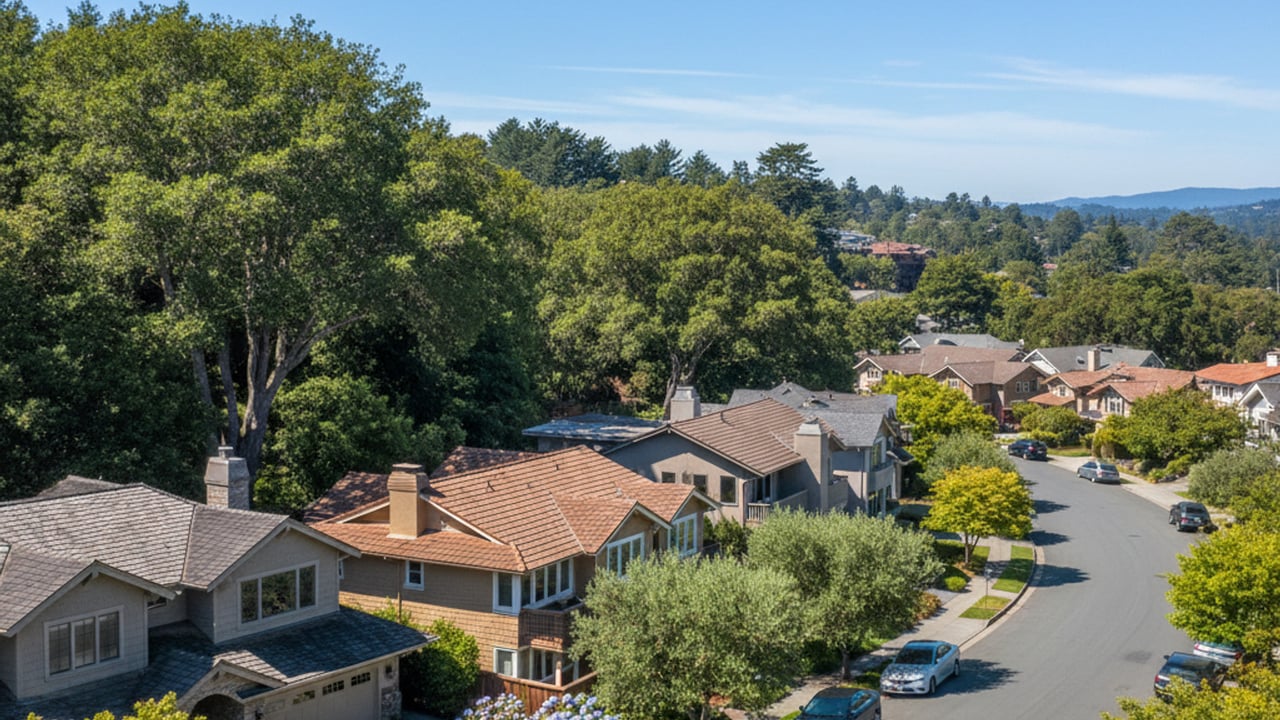
Selling a home in Marin County involves more than just handing over the keys and cashing a check. In 2026, the median home price in Mill Valley often exceeds $2,000,000, which means the associated transaction fees add up quickly.
Before you list your property, you should understand exactly where your money goes during the escrow process. Knowing the standard seller closing costs in Mill Valley, CA allows you to accurately project your final net proceeds and budget for your next move.
The Primary Fees You Will Pay at Closing
Total closing costs for sellers in Marin County typically run between 5% and 8% of the final purchase price. The bulk of this expense comes from real estate commissions, which are negotiated with your listing agent before the property hits the market.
Beyond commissions, you will encounter several standard administrative and insurance fees. Custom dictates who pays for what in Northern California, though everything is technically negotiable in the purchase agreement.
The title company and escrow officer handle the distribution of these funds at the closing table. They will provide a closing disclosure that outlines every charge deducted from your gross proceeds.
Here are the major line items you can expect to see on your final settlement statement:
-
Real estate commissions: Sellers traditionally pay the listing brokerage, which may share a portion of that fee with the buyer's agent depending on your listing agreement.
-
Owner's title insurance: In Marin County, the seller customarily purchases the owner's title insurance policy to assure the buyer that the property has a clear title.
-
Escrow fees: The cost of the escrow service, which generally ranges from $1,500 to $2,500, is usually split equally between the buyer and the seller.
-
Prorations: You will pay a prorated share of the current property taxes and any homeowner association dues up to the exact close date.
How Transfer Taxes Work in Mill Valley
The documentary transfer tax is a state and county levy applied whenever real estate changes hands in California. In Marin County, local custom dictates that the seller pays this entire tax out of their sale proceeds.
The standard transfer tax rate in Mill Valley is $1.10 for every $1,000 of the purchase price. This breaks down to $0.55 for the county and $0.55 for the city.
Unlike neighboring cities such as San Rafael or Oakland, Mill Valley is a General Law city. This means it does not impose an additional municipal transfer tax on top of the standard county rate.
On a $2,000,000 home sale, the transfer tax amounts to exactly $2,200. The title company will automatically calculate this figure and deduct it from your payout before recording the deed.
Local Point-of-Sale Inspections and Disclosures
The City of Mill Valley requires sellers to obtain a Residential Building Report (RBR) before the close of escrow. This document verifies the property's permit history and zoning status for the incoming buyer.
You must also comply with state fire-hardening regulations. Because almost all properties in Mill Valley sit within a designated wildland-urban interface, sellers must provide a defensible space inspection under Assembly Bill 38.
Buyers will often conduct their own investigations, including home, pest, and sewer lateral inspections. These reports routinely cost $300 to $600 each, and buyers typically cover the upfront expense.
However, the findings from these inspections often lead to requests for seller credits. If a pest report reveals dry rot or the sewer lateral needs replacing, you may need to offer a financial concession to keep the deal together.
Estimating Your Net Proceeds on a $2 Million Sale
A seller net sheet provides a line-by-line estimate of your final cash payout. Your listing agent or title officer can generate this document as soon as you determine a target listing price.
To illustrate the math, consider a home selling for $2,000,000 with a 5% total commission rate. The gross proceeds are immediately reduced by the $100,000 commission, leaving $1,900,000.
Next, you subtract the $2,200 documentary transfer tax and your share of the escrow fees, which might be around $1,000. You also need to pay for the owner's title insurance policy, which generally runs about $4,000 on a $2 million transaction.
Finally, you deduct any negotiated seller credits, prorated property taxes, and your remaining mortgage payoff balance. The final number remaining is the actual cash wired to your bank account on closing day.
Strategies to Reduce Your Out-of-Pocket Expenses
Every dollar saved during the transaction goes directly toward your net profit. The largest controllable expense is the real estate commission, which you determine when signing your listing agreement.
You can negotiate a lower percentage with your agent or explore brokerages that offer flat-fee listing services. Just be aware that the compensation you offer to the buyer's broker can impact how your property is received by agents representing active buyers.
Scheduling a pre-listing inspection is another effective way to protect your bottom line. Identifying and fixing minor issues before listing prevents buyers from demanding outsized repair credits later in the escrow period.
You also have the right to shop around for title and escrow services. While sellers normally accept the company recommended by the buyer or listing agent, comparing fee structures between local Marin County title offices can yield minor savings.
Frequently Asked Questions About Selling in Marin County
Who pays the transfer tax in Mill Valley, CA?
In Marin County, the seller customarily covers the entire documentary transfer tax. The fee is deducted directly from the seller's proceeds by the escrow officer.
How much are real estate commissions in Marin County?
Total commissions usually range from 4% to 6% of the final sale price, though all fees are negotiable. This total is typically divided between the listing brokerage and the buyer's agent.
Does Mill Valley require a point-of-sale inspection?
Yes, sellers must order a Residential Building Report from the city prior to closing. Properties in wildfire zones must also undergo a defensible space compliance check before the property transfers.