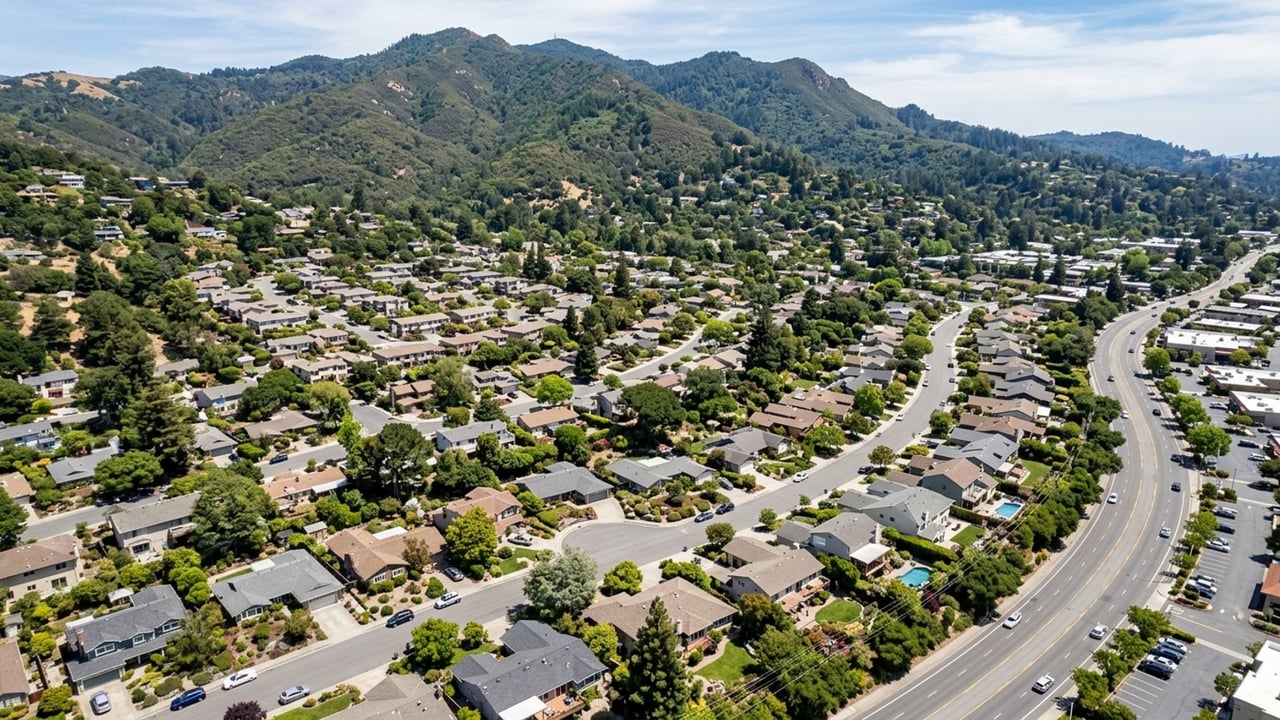
Marin County has a way of narrowing itself down for buyers pretty quickly. You start with the big picture - north of the Golden Gate Bridge, good access to open space, reasonable shot at San Francisco - and then the towns start to separate themselves. Mill Valley and Corte Madera come up more than almost anywhere else, and for good reason. They're close to each other on a map, but living in Mill Valley is a genuinely different experience than settling in Corte Madera.
The decision usually comes down to three things: what you can spend, what kind of home you want to live in, and how you're getting to work every day.
Comparing Housing Markets and Home Prices
The price gap here is not subtle. Mill Valley's median sale price runs around $3.2 million. Corte Madera's median sits between $1.62 million and $1.70 million, with average home values ranging from $1.76 million to $1.90 million. That's a difference of more than $1.5 million between two towns that share a zip code boundary. For a lot of buyers, that gap ends the conversation before it really begins.
Mill Valley moves fast. In mid-2026, homes there spent a median of just 9 days on the market, and the average sale-to-list ratio was 1.14 - meaning buyers were routinely paying above asking to get a deal done. With only about 21 homes in inventory at that point, you don't have the luxury of thinking it over for a week.
Corte Madera gives buyers a bit more room to breathe. The price point is lower, the inventory tends to include townhomes and condominiums alongside single-family homes, and you'll generally find more varied options across different budgets.
Property Types and Architectural Styles
Mill Valley's housing stock reflects the terrain it sits in. You'll find Craftsman cottages, Queen Anne and Victorian homes, Tudor cottages, midcentury ranch styles, Mediterranean and Spanish Colonial Revival designs, and contemporary hillside estates tucked near the redwoods. The architecture and the landscape are pretty much inseparable.
Corte Madera runs a different mix. Craftsman and bungalow homes, Mediterranean styles, and mid-century ranches are all represented. Buyers specifically looking for Eichlers can find them here. Rounding out the inventory are lagoon-front properties, hillside contemporaries with bay views, and denser townhome communities - the kind of variety that opens the door for buyers who might not fit the all-or-nothing price points of some neighboring towns.
Commute Times and Highway Access
The drive from Mill Valley to San Francisco covers about 14 miles via the Golden Gate Bridge. Under normal conditions, that's 25 to 55 minutes. During peak rush hour, it can push past 65 minutes - and that's before you factor in the time it takes to wind down from a hillside neighborhood to the freeway in the first place. Residents who'd rather skip the bridge can use Golden Gate Transit buses or drive to the Larkspur Ferry, which crosses the bay in about 30 to 35 minutes.
Corte Madera sits directly on Highway 101. You don't have to navigate hillside roads to reach the freeway - you're essentially already there. The Larkspur Ferry terminal is also close by, giving residents the same water-route option into the city.
If you're driving into San Francisco five days a week, that difference in freeway access matters. Corte Madera removes a variable that Mill Valley buyers just have to accept as part of the deal. Buyers with more flexibility in their schedules tend to find Mill Valley's roads less of an issue.
Parks, Shopping, and Local Amenities
Muir Woods National Monument sits immediately west of Mill Valley. That's not a marketing detail - it's a genuine feature of daily life there. Mill Valley is also deeply connected to the Mount Tamalpais trail network, with paths that extend directly from residential streets into the surrounding hills. You don't have to drive to a trailhead.
Corte Madera borders the foothills of Mount Tamalpais on its west side and has its own trail connections. In town, the 20-acre Corte Madera Town Park is the central gathering space - flat, open, and active with summer concerts, picnics, and youth sports leagues through the year.
Retail and Dining Centers
Mill Valley's downtown anchors around Lytton Square, a walkable historic district with local shops and restaurants that fit the scale of the town. It's boutique by nature, and that's not an accident.
Corte Madera functions as a regional retail hub. The Village at Corte Madera and Town Center Corte Madera are two large shopping malls that straddle Redwood Highway, offering major national retailers and restaurants - REI, Lululemon, and the Cheesecake Factory among them. If proximity to that kind of commercial infrastructure matters to you, Corte Madera is the clear answer.
Deciding Between the Two Towns
Most buyers come into this comparison with their budget already doing some of the work. The $1.5 million-plus median price difference between Mill Valley and Corte Madera takes a lot of people off one side of the list before lifestyle even enters the picture.
For those who can genuinely consider both: Mill Valley is the choice if you want historic architecture, wooded hillside lots, and a walkable downtown. You're accepting a faster-moving market, prices consistently above list, and a commute that can be real work during rush hour. Corte Madera is the choice if you want flat lots, lagoon-front options, access to major retail, or the flexibility of a condo or townhome - and if a clean Highway 101 on-ramp matters to your mornings.
The only way to really settle it is to spend time in both. The topography alone changes how each town feels to live in, and that's something no comparison chart can tell you.
Frequently Asked Questions
Is it more expensive to buy a house in Mill Valley or Corte Madera?
Mill Valley is considerably more expensive. The median sale price there runs approximately $3.2 million, and homes routinely sell above asking. Corte Madera's median falls between $1.62 million and $1.70 million.
Which town offers a better commute to San Francisco, Mill Valley or Corte Madera?
Corte Madera has the edge, largely because of its direct Highway 101 access. Mill Valley is geographically close to the Golden Gate Bridge, but getting from a hillside neighborhood to the freeway can push peak commutes past 65 minutes. Both towns have easy access to the Larkspur Ferry.
Which has better walkability and downtown amenities: Mill Valley or Corte Madera?
Depends what you mean by amenities. Mill Valley has a walkable historic downtown centered on Lytton Square - local shops, dining, smaller scale. Corte Madera has two large shopping malls, The Village and Town Center, with major national retailers and chain restaurants. Neither is better in the abstract; it's a question of what you actually use.
Are there differences in property types and lot sizes between Mill Valley and Corte Madera?
Yes, and the differences are significant. Mill Valley is hillside estates, historic cottages, and homes built into wooded redwood settings. Corte Madera offers flatter lots, lagoon-front homes, Eichlers, and a larger selection of townhome and condominium communities.