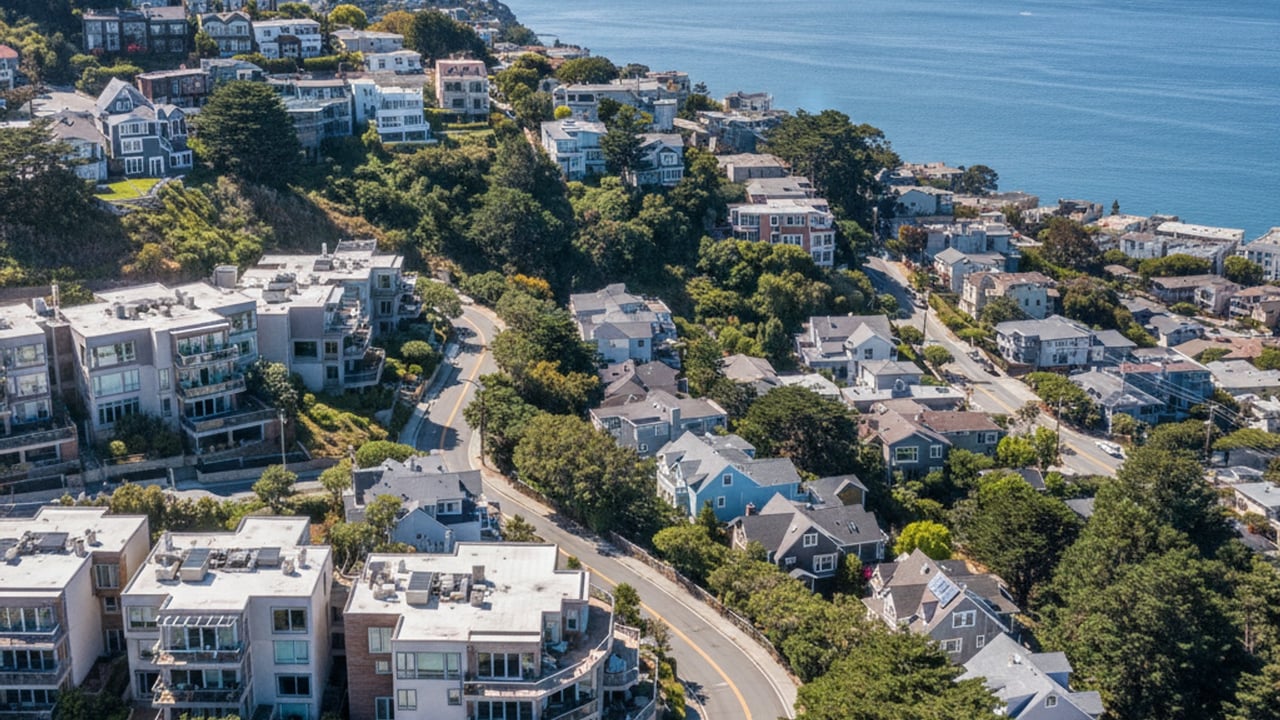
Sausalito attracts retirees for reasons that are easy to understand - waterfront views, a walkable (in places) village feel, and a Golden Gate Bridge separating you from San Francisco rather than a freeway. Homes here spend roughly 14 days on the market before selling, so if you're serious about living in Sausalito, CA, you don't have the luxury of taking your time.
Buyers will find a mix of independent setups and continuing care models. The difference between a standard residential neighborhood and an age-restricted facility heavily influences both daily lifestyle and budget.
An Overview of Senior Living in Sausalito, CA
Finding an age-restricted property in this part of Marin County means looking at both standalone homes and managed facilities. The median sale price sits around $1,851,000 as of mid-2026 - that number alone shapes whether most retirees end up buying or renting.
Inventory is tight. With only about 32 active listings recently, you should expect competition. Properties routinely sell for about 7% over asking, which means coming in with some budget flexibility isn't optional - it's just how this market works.
Senior Living Options Available Locally
The area runs the spectrum, from 55-plus mobile home parks to full-scale continuing care retirement communities (CCRCs). Some retirees focus their search on the New Town area in northern Sausalito for its distinct neighborhood character. Others want a larger facility that bundles housing, meals, and medical care into a single monthly fee. The right fit depends entirely on your current mobility, your anticipated healthcare needs, and what you're working with financially.
How the 80/20 Age Rule Works
California age-restricted communities operate under the federal Housing for Older Persons Act (HOPA), which allows a neighborhood to restrict residents by age as long as it meets specific occupancy thresholds. The standard 80/20 rule requires that at least 80% of occupied units house at least one person who is 55 or older. The community's homeowner association or management enforces this, collecting age verification documents from residents.
Comparing Different Levels of Care and Independence
Senior housing is not one category. The terminology signals the level of medical and lifestyle support involved, and moving from a standard single-family home into a managed property requires understanding these tiers clearly - because choosing wrong means either overpaying for services you don't use or finding yourself without support you actually need.
Active Adult Neighborhoods
These communities are single-family homes, townhouses, or condos built for independent residents. A homeowner association handles exterior maintenance, landscaping, and community amenities. There's no medical care or meal service - it functions exactly like a standard neighborhood, just with an age restriction attached.
Independent Living Facilities
Independent living typically looks like senior apartments or condo-style complexes. Management usually provides communal dining options, social activities, and housekeeping. These properties are for seniors who manage their own daily routines but want the convenience of shared amenities on-site. Medical care isn't part of the package, though you can hire private in-home help if you need it.
Assisted Living Properties
Assisted living sits between full independence and round-the-clock nursing care. Staff help with daily activities - bathing, dressing, medication management. There's a base rate for room and board, plus tiered fees that scale with the level of personal care required.
Continuing Care Retirement Communities
CCRCs house independent living, assisted living, and skilled nursing on a single campus. As your health needs change, you move between those tiers without relocating to an entirely different facility. The stability that provides is the main selling point - but it comes with a substantial upfront entrance fee alongside monthly maintenance dues.
Senior Apartments and Mobile Home Parks
For a more affordable entry point, 55-plus mobile home communities and senior apartments are worth looking at seriously. Mobile home parks typically require you to purchase the structure while paying monthly lot rent. Senior apartments run on standard annual leases, and some offer income-restricted units for qualifying individuals.
Finding the Right Neighborhood in Sausalito
Where you land within the city affects both what you'll pay and how you'll actually live day to day. Sausalito has steep hillside terrain with panoramic bay views on one hand, and flatter, more walkable districts on the other. Your mobility level relative to that topography is a real consideration - a hillside property with stunning views can become a daily obstacle course.
High-End Senior Housing
Luxury senior living in Marin County means resort-style amenities, fine dining, wellness programs, private transportation, fitness centers, and concierge services. The costs track with the broader Sausalito real estate market. Residents are paying for waterfront views, upgraded finishes, and a full social calendar.
Affordable and Low-Income Options
Finding affordable senior housing in the San Francisco Bay Area takes patience and early action. Some properties offer subsidized rent for seniors whose income falls below specific regional thresholds, but these communities maintain long waitlists. Eligibility depends on household income, age, and sometimes current residency status in Marin County.
Buying Versus Renting
Buying in an active adult community builds equity and locks in a fixed housing payment, minus any HOA increases. Renting or moving into a managed facility frees up capital and removes the maintenance burden - and it keeps your options open if your care needs shift. Neither is automatically the right answer; it comes down to your financial goals and how long you're planning to stay.
Looking at New Town and North Sausalito
The New Town area in northern Sausalito has a noticeably different feel from the downtown tourist district. It's flatter, which makes it more walkable for daily errands. The pace is quieter, and the waterfront is still close. A lot of retirees zero in on this section of the city for exactly that combination.
Budgeting for Senior Living in Marin County
With the local median home price sitting well over $1.8 million, there's no way around the fact that retiring here requires serious financial planning. The purchase price or base rent is just the starting point - managed facilities layer on fee structures that can catch people off guard if they haven't asked the right questions upfront.
Monthly Rent Expectations
Senior apartment rents vary widely depending on the level of care and the property's location. Independent living leases typically cover the unit plus utilities, basic housekeeping, and a meal plan. Assisted living runs significantly higher because personal care services are folded into the monthly bill. Always ask for a detailed breakdown of what the base rent actually covers and what triggers an extra charge.
HOA Dues and Facility Entrance Fees
In 55-plus neighborhoods, monthly HOA dues cover exterior maintenance and shared amenities, ranging from a few hundred to over a thousand dollars a month depending on what the community offers. CCRCs add a large upfront entrance fee before move-in - this secures your place and guarantees access to higher levels of care, and some contracts offer partial refunds to the resident's estate later.
Medicare and Medi-Cal Coverage
Medicare does not cover room and board in independent or assisted living facilities. It pays for approved medical services, short-term rehabilitation, and skilled nursing care - full stop. Medi-Cal, California's Medicaid program, may offer some financial assistance for assisted living through specific waiver programs, but those waivers carry binding income and asset limits, and not all facilities in Marin County accept them.
Evaluating Sausalito as a Retirement Destination
A mild climate, access to cultural attractions, and natural beauty are genuinely part of the picture here. Sausalito gives you a small-town feel with San Francisco just across the Golden Gate Bridge. That setup works well for active seniors who enjoy boating, hiking, and dining out. It also comes with a geography and cost structure that deserve an honest look before you commit.
Cost of Living Considerations
Marin County's cost of living ranks among the highest in the nation. Groceries, utilities, everyday services - all of it runs at a premium. State income taxes and local sales taxes add pressure on fixed incomes. Running the numbers with a financial advisor before you make a move is worth the time.
Healthcare Access and Walkability
Sausalito residents have access to top-tier hospitals and specialized medical centers throughout Marin County and San Francisco, which matters when you're planning for the long term. Walkability is a different story depending on where you land. The waterfront and New Town areas offer flat sidewalks and pedestrian-friendly streets. The hillside neighborhoods have steep inclines and narrow roads that generally require a car.
Weighing the Pros and Cons of Age-Restricted Housing
Moving into a 55-plus community changes your daily environment in real ways. These neighborhoods are designed specifically for older adults, which has genuine advantages - and a few limitations that are worth knowing about before you sign anything.
Advantages of Age-Restricted Properties
A quiet, predictable environment is the core appeal. These communities tend to build strong social networks through organized events, clubs, and shared recreational facilities. Maintenance-free living is another draw - with the HOA or property management handling landscaping and exterior repairs, you get your time back to travel or pursue other things.
Drawbacks to Consider
The age restriction cuts both ways. If you're planning to have adult children under 55 or young grandchildren move in permanently, these communities won't permit it. On the financial side, high monthly fees and restrictive HOA covenants can limit how you use or modify your property. Those aren't reasons to walk away, but they're factors to weigh honestly against what you're getting.
Steps for Touring and Selecting a Property
You have to see these places in person. A property can look flawless in photos and feel completely wrong once you walk through it. Treat each tour like an interview - you're evaluating the staff, the maintenance standards, and the actual atmosphere of the community, not just the brochure version.
Questions to Ask on Your Tour
Ask about the history of fee increases. You want to know how often rents or HOA dues have gone up and by what percentage. Ask about the staff-to-resident ratio, particularly in assisted living setups. And get a clear picture of the exact process for transitioning to a higher level of care if your health changes - vague answers to that question are a red flag.
Vetting Facilities and Reading Reviews
Talk to current residents while you're there. They'll give you a more accurate read on daily life, food quality, and management responsiveness than any marketing material will. Check state licensing records for any assisted living or skilled nursing facilities on your list - California maintains public databases where you can review inspection reports and past citations.
Frequently Asked Questions About Sausalito Senior Living
Are there any dedicated 55+ retirement communities located directly in Sausalito, or are they mostly in surrounding Marin County?
While Sausalito offers senior apartments and independent living options, many of the large 55-plus residential neighborhoods are located in the broader Marin County area. Buyers often expand their search slightly beyond the city limits to find traditional active adult communities.
How much are the average monthly HOA or buy-in fees for senior living facilities in the Sausalito area?
HOA dues in standard age-restricted neighborhoods can range from a few hundred to over a thousand dollars a month. Continuing care facilities require much larger upfront entrance fees, which vary widely based on the specific property and the level of care guaranteed.
How accessible are Sausalito retirement properties for seniors with mobility issues given the city's steep hillside geography?
Properties in the flatter New Town and waterfront districts offer excellent accessibility and walkability. Homes in the hillside neighborhoods feature steep inclines that can be difficult for residents with mobility limitations to manage on foot.
Can I transfer my current California property tax base to a downsized retirement home in Sausalito under Proposition 19?
Yes, Proposition 19 allows eligible homeowners aged 55 and older to transfer their original property tax base to a new home anywhere in California. The new home can be equal to or lesser in value, or even more expensive with a proportional adjustment.
What are the specific age requirements for a younger spouse if we buy a home in a local Marin County 55+ community?
Under the 80/20 rule, only one occupant of the household needs to be 55 or older. A younger spouse can typically live in the community, though individual homeowner associations may have specific minimum age rules for the second resident.
How long is the typical waitlist for the premier independent senior living communities around Sausalito?
Waitlists for high-demand independent living and affordable senior housing in the San Francisco Bay Area can stretch from several months to a few years. Contact facilities early - well before you're ready to move.