Marin County gives buyers two very different propositions depending on how far north along Highway 101 you're willing to go. Living in Sausalito puts you just north of the Golden Gate Bridge - with steep terrain, immediate waterfront access, and a price tag to match. San Rafael is further up the corridor, with diverse suburban neighborhoods and a lower entry point into Marin County real estate. Both cities connect you to San Francisco, but they get there at different speeds and different costs.
If you're trying to decide between the two, the honest starting point is numbers. What does a home actually cost here, how fast does the market move, and what does that mean for your budget? That's where this comparison starts.
Comparing Home Prices and Market Pace
The median home price in Sausalito sits around $1.85 million as of mid-2026. Zillow's typical home value for San Rafael runs roughly $1,275,885 - a meaningful gap, though San Rafael's numbers shift considerably by neighborhood. Late 2025 data showed Central San Rafael homes selling around $1.3 million, while North San Rafael properties averaged closer to $955,000. Where you land within San Rafael matters.
The pace of the real estate market is just as telling as the prices. Sausalito homes sell in roughly 14 days and regularly close above asking, with a recent average sale-to-list ratio of 107%. San Rafael properties stay on the market considerably longer - 43 to 44 days on average before going under contract. That difference isn't trivial. In Sausalito, you'll be competing hard and moving fast. In San Rafael, you have more room to breathe.
Property Taxes in Sausalito and San Rafael
Both cities fall within Marin County's typical effective tax range of 1.0% to 1.25% for new buyers. For the 2025-2026 fiscal year, the verified ad-valorem effective property tax rate in Sausalito is about 1.136%. San Rafael's effective rate comes in slightly higher at 1.206% - roughly 0.07 percentage points more than Sausalito. It's a modest difference, but it's real, and it should be factored into your estimated monthly payment calculations before you start writing offers.
Available Property Types and Architecture
The housing stock in each city reflects the land it sits on, and that's immediately obvious when you start touring. Sausalito is built into steep hillsides with bay access woven throughout. San Rafael spreads across a much larger, more varied geographic footprint. Those aren't just scenic differences - they shape what's available, how lots are configured, and what you'll deal with as a homeowner.
Think about how much outdoor space you actually need, and whether a hillside view or a conventional suburban street better fits how you want to live day to day.
Sausalito Housing Styles
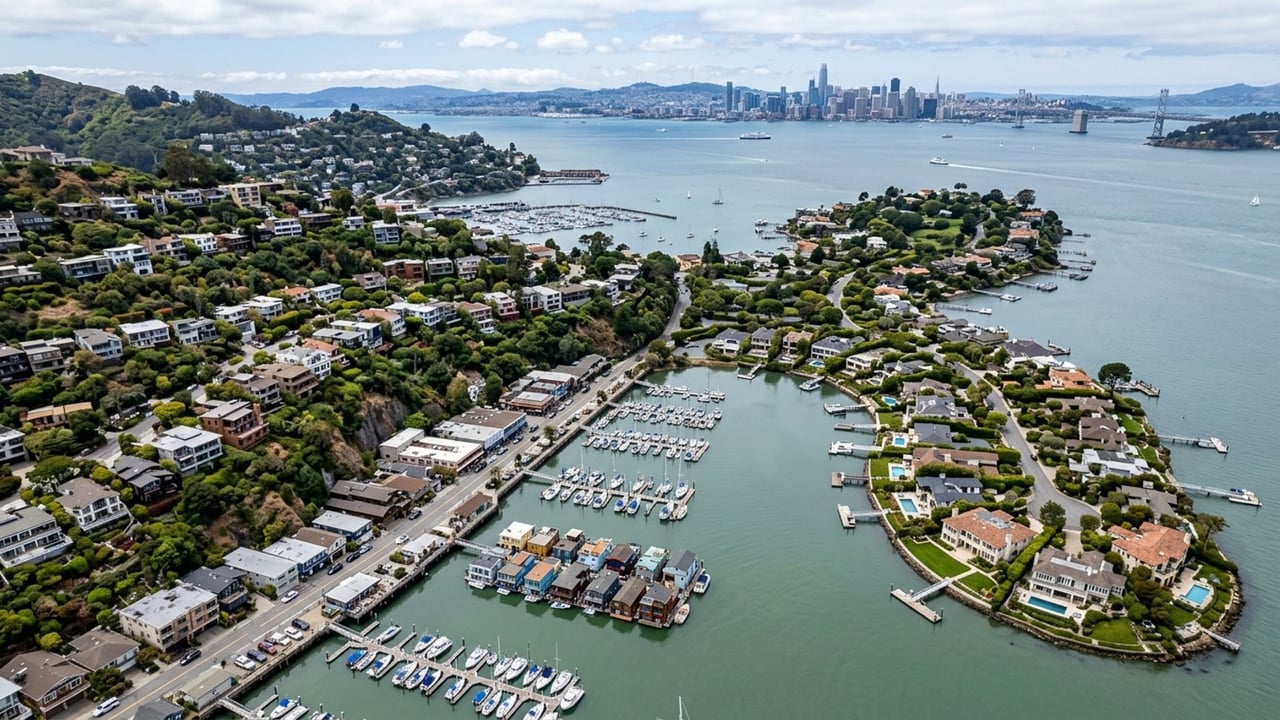
Sausalito's market splits mainly between attached condominiums and detached single-family homes. Hillside properties - especially those with clear views of the San Francisco skyline - command a premium. Those homes typically come with tiered lots, expansive decks, and mid-century or contemporary architecture built specifically for steep terrain.
Closer to the downtown commercial center, you'll find traditional waterfront properties and floating homes. These tend to have smaller lots, but they put you right on the bay and within walking distance of local businesses.
San Rafael Housing Styles
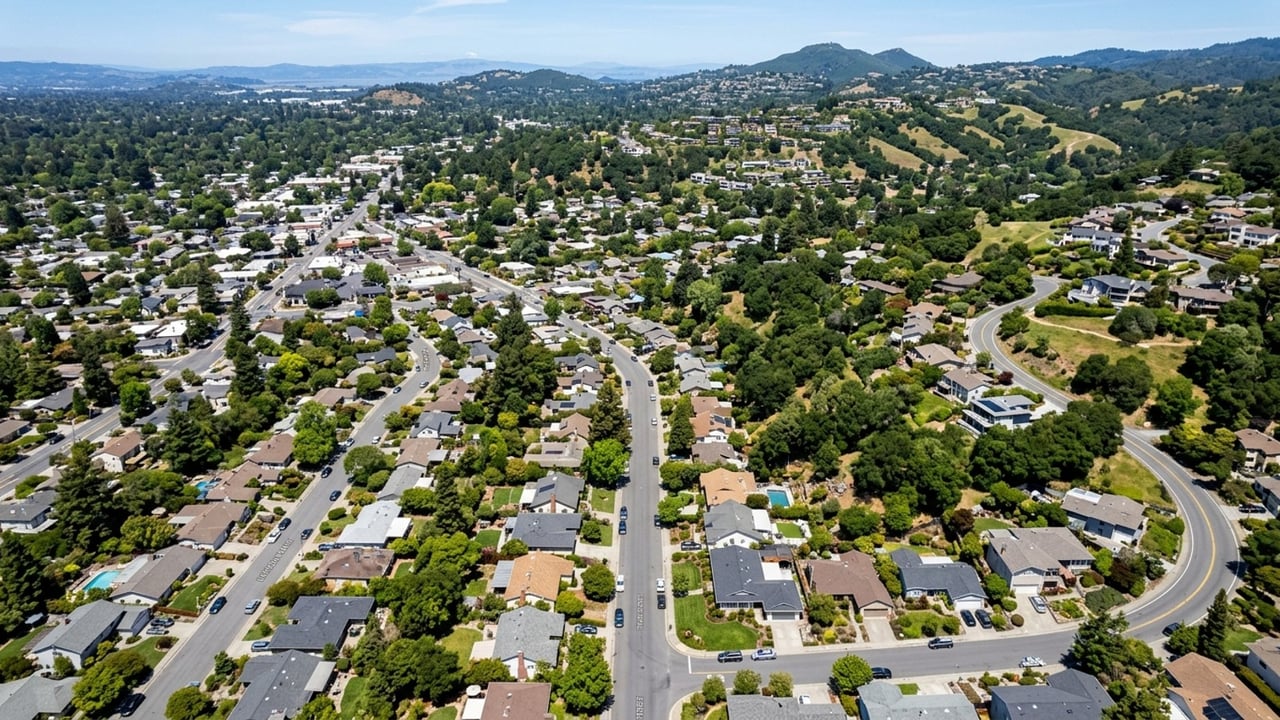
San Rafael is a different experience - a larger city with diverse suburban neighborhoods spread across considerably more ground. Buyers looking for traditional single-family layouts tend to start their search here rather than in Sausalito.
Architectural styles vary across San Rafael's different sections, but the overall character is more conventional compared to Sausalito's tiered hillside properties. If a standard neighborhood feel is what you're after, San Rafael is the more natural fit.
Highway 101 and Commuting to San Francisco
Driving from Sausalito into San Francisco via Highway 101 South across the Golden Gate Bridge covers roughly 8 to 12 miles. Off-peak, that's typically under 30 minutes. During heavy morning and evening rush hours, expect that same drive to stretch beyond 60 minutes. Highway 101 is the primary artery for both cities, and transit options exist for buyers who'd rather not drive - including the Sausalito Ferry and the San Rafael SMART station.
Transit and Driving in Sausalito
Sausalito is the closest Marin County city to San Francisco, sitting right at the northern end of the Golden Gate Bridge. The Sausalito Ferry is a genuine alternative to bridge traffic, and plenty of commuters use it regularly.
That said, getting from a Sausalito home to Highway 101 involves steep, winding local streets before you're even on the main road. Before you fall in love with a specific property, drive the route to the highway at the time you'd actually be leaving for work. That 10-minute stretch can feel very different on a Tuesday morning.
Transit and Driving in San Rafael
San Rafael sits further north along Highway 101, so drivers simply have more distance to cover heading into San Francisco. The city functions as a regional transit hub, with access to the SMART train system. Commuters can use the San Rafael SMART station to travel north through Marin and Sonoma counties - useful if your job isn't in San Francisco proper.
Frequently Asked Questions
How much more expensive is it to buy a home in Sausalito, CA compared to San Rafael?
Sausalito runs considerably higher. The median sale price there is approximately $1.85 million. San Rafael's typical home value is closer to $1.27 million, though that number varies meaningfully by neighborhood.
Is the daily commute to San Francisco significantly faster using the Sausalito ferry compared to traveling from San Rafael?
It depends on where exactly you're starting and when you're traveling. Driving from Sausalito to San Francisco takes under 30 minutes off-peak but can exceed an hour during rush hour. Comparable commute-time data from San Rafael to San Francisco isn't available in recent market reports.
Which city offers better real estate options for buyers needing large yards and family-friendly neighborhoods, Sausalito or San Rafael?
San Rafael is known for its diverse suburban neighborhoods, which tend to attract buyers looking for traditional single-family layouts. Sausalito properties typically feature tiered hillside lots or smaller waterfront footprints. Look closely at available lot sizes in each city against what you actually need.
What are the hidden maintenance costs of buying a hillside home in Sausalito versus a flatter property in San Rafael?
Current market data doesn't specify maintenance costs for either area. What is clear is that Sausalito's hillside homes feature tiered lots and architecture built for steep terrain. Budget for specialized inspections on any property built on a steep grade - that's not optional.
Which local real estate market moves faster and is more prone to bidding wars, Sausalito or San Rafael?
Sausalito is the faster market. Homes there sell in an average of 14 days, with many closing above asking at a 107% average sale-to-list ratio. San Rafael properties take an average of 43 to 44 days to sell.
How much does the microclimate and summer fog differ between Sausalito, CA and San Rafael?
Local real estate data doesn't track microclimate or fog variations between the two cities. Spend time in both locations at different times of day - that's the only reliable way to understand the local weather patterns for yourself.