Marin County doesn't give you one market - it gives you several, and the differences matter more than most buyers expect. In mid-2026, two towns north of the Golden Gate Bridge keep coming up in the same conversation: Mill Valley, with its redwood-covered hills, and Tiburon, a peninsula with water on three sides and San Francisco Bay views from nearly every angle. Both sit at the high end of an already expensive county, making living in Mill Valley or Tiburon a serious investment, and neither is forgiving to unprepared buyers.
Comparing the Mill Valley and Tiburon Markets
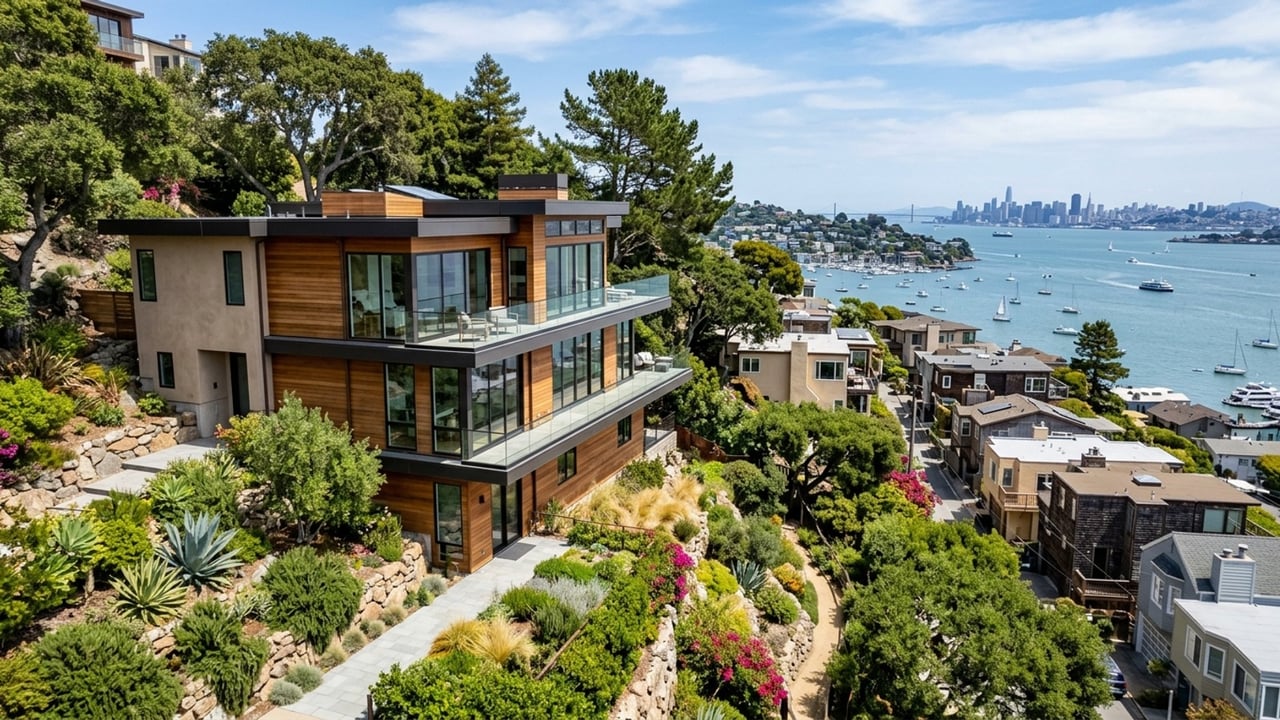
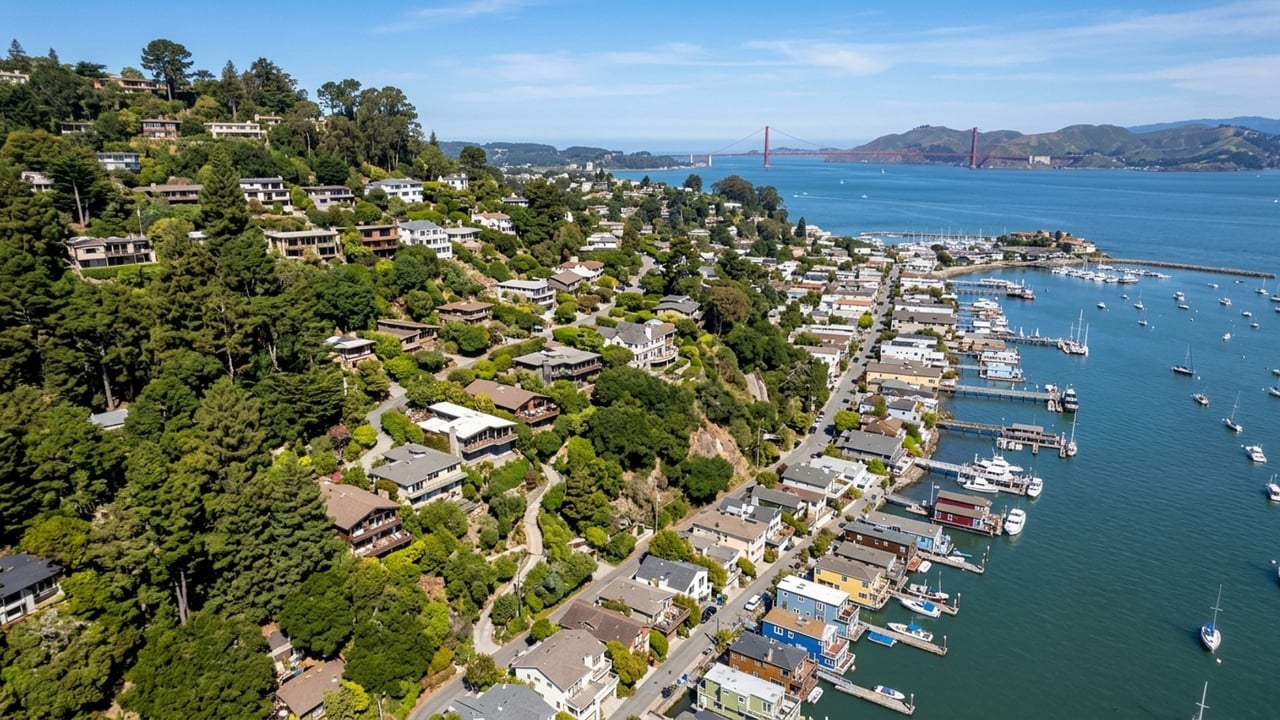
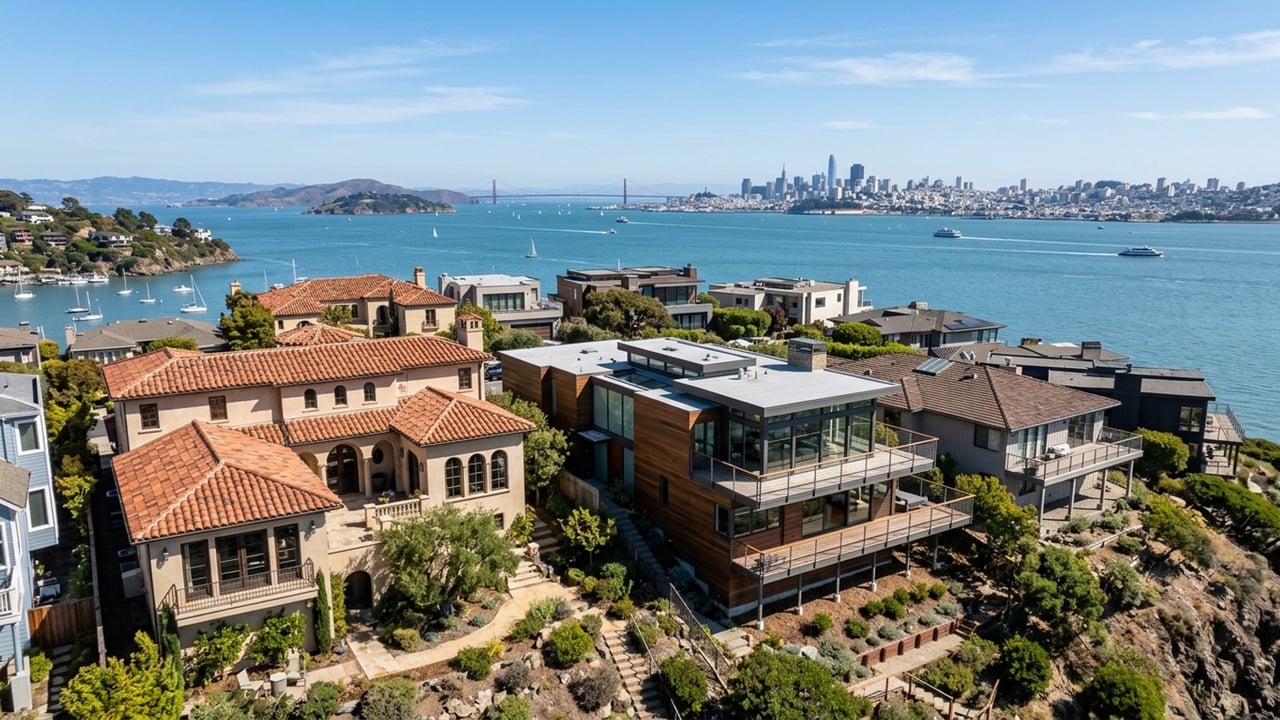
These are two genuinely different towns, and it shows in the real estate. Mill Valley is hillside living - dense tree canopy, properties tucked into the topography, a sense that the forest is right there at the edge of everything. Tiburon is oriented almost entirely toward the water. Three sides of that peninsula face the bay, and the real estate reflects it.
In both towns, single-family homes dominate the inventory. Custom builds and historic properties make up the bulk of what comes to market, and when something is priced right, multiple offers follow quickly. As of 2026, Mill Valley listings are averaging just 9 days on the market before going under contract, with just over one month of housing supply. That's a thin cushion.
Home Prices and Market Inventory
Mill Valley's median sale price reached approximately $3.22 million in late spring 2026. Homes there have been closing at roughly 113% of list price, with 18 homes closing in a single month - so the pace matches the premium.
Tiburon runs higher. Median sale prices there range between $3.5 million and $4.2 million depending on the month and waterfront proximity. Zillow estimates place Tiburon's overall average home value around $3.1 million, but closed sales regularly exceed that figure. Either way, you're not finding a deal in either of these towns - you're deciding which real estate market you want to compete in.
Architectural Styles and Property Types
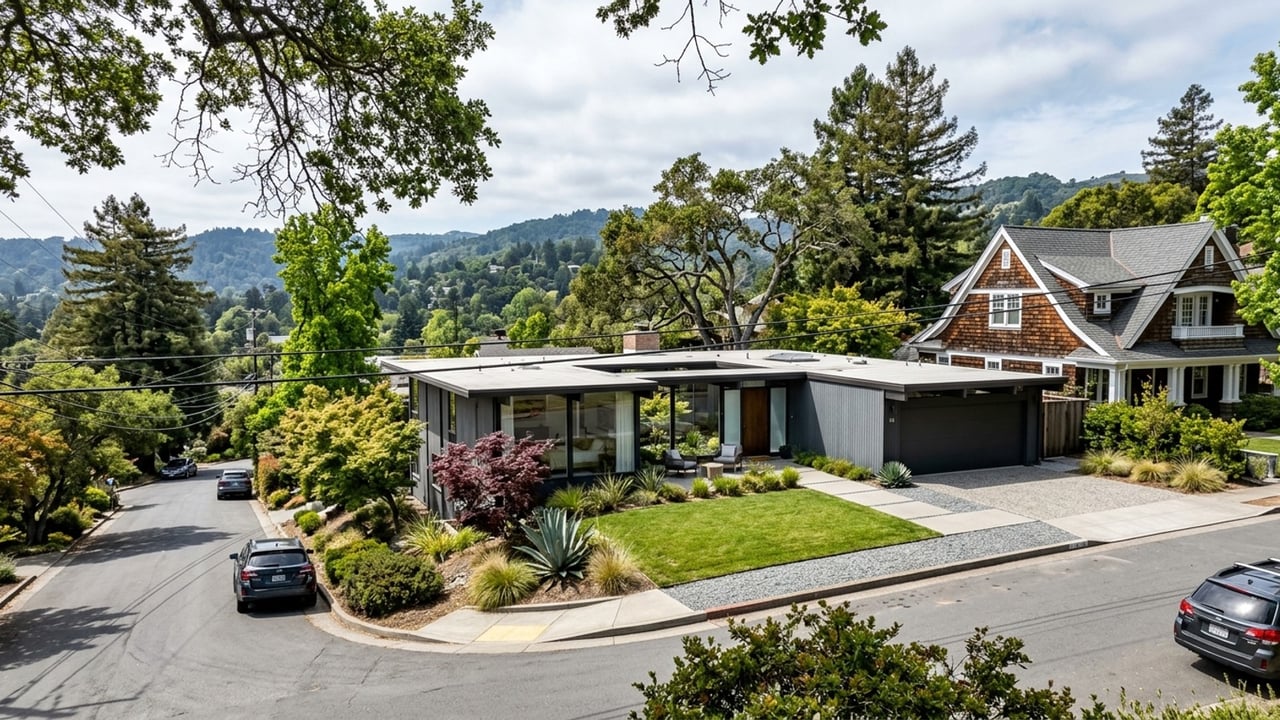
Mill Valley's housing stock covers a lot of ground. Historic Victorians and Craftsman homes share the hillsides with Spanish and Mediterranean Revival properties, and the area has a strong Mid-Century Modern tradition - homes from the 1950s through the 1970s with flat or low-pitched roofs and large glass panels. Newer construction tends toward Modern Farmhouse designs and contemporary custom builds that work with the natural topography rather than against it.
Tiburon shares that Mid-Century Modern thread, influenced by architects like Raphael Soriano and William Wurster. The difference is orientation - because the town sits on a peninsula, Mediterranean-style and contemporary custom estates are often specifically designed to pull in bay views. The architecture tends to follow the geography.
Commuting from Marin County to San Francisco
The commute question comes up in almost every conversation about moving to Mill Valley or Tiburon, and the honest answer is that it depends on how you travel and when.
Driving from Mill Valley to San Francisco across the Golden Gate Bridge takes roughly 25 to 55 minutes under normal conditions. During peak morning and evening hours, that can stretch to 65 minutes or more. Neither town insulates you from traffic if you're behind the wheel at the wrong time.
The ferry changes the calculation. Both Mill Valley and Tiburon residents have access to the regional ferry system, and for buyers who work in the city, that predictable schedule - no highway, no bridge backup - is often the deciding factor.
Ferry Routes and Transit Options
Mill Valley residents typically use the Larkspur Ferry, which takes about 30 to 40 minutes to reach the San Francisco Ferry Building. The terminal has ample parking and a straightforward route across the bay.
Tiburon has its own dedicated ferry terminal right in town - walkable for most residents. Exact transit times vary, but the Tiburon ferry is a well-used daily option for residents commuting into the city. If the commute matters to you - and in both these markets, it should - test both routes before you commit.
Everyday Living and Local Amenities
Tiburon's downtown sits directly on the water. You can have lunch with a bay view, walk to the ferry, and not touch a car for the rest of the afternoon. The peninsula geography means the shoreline is always close.
Downtown Mill Valley and its commercial areas sit further inland, wrapped in the same redwood environment that defines the residential neighborhoods. It's a different texture - more forest than waterfront, more integrated with the natural surroundings than oriented toward the bay. Neither is better; they're just different, and most buyers know which one fits their life within about twenty minutes of walking around.
Deciding Between the Two Markets
Most buyers who get serious about both towns land on a decision based on three things: architectural preference, budget, and how they plan to get to work.
Waterfront estates and Mediterranean designs point toward Tiburon. Hillside Craftsman homes or Modern Farmhouses, more often than not, point toward Mill Valley. On budget, Tiburon's median sale prices frequently reach into the $4 million range, while Mill Valley's median sits closer to $3.22 million. That's a real difference, though in either town you'll need to move quickly and come prepared - Mill Valley homes are selling in just over a week, often above asking.
Tour both. The right answer usually becomes obvious once you've spent time in each place.
Frequently Asked Questions
Is it more expensive to buy a house in Mill Valley, CA or Tiburon?
Tiburon generally runs higher. Recent data shows median sale prices there ranging from $3.5 million to $4.2 million depending on the month and waterfront proximity. Mill Valley's median sits at approximately $3.22 million - though homes there frequently sell above asking price, so your actual cost can close the gap.
Is the commute to San Francisco faster driving from Mill Valley or taking the Tiburon ferry?
It depends on traffic. Driving from Mill Valley takes 25 to 55 minutes under normal conditions, but can exceed 65 minutes during peak hours. The ferry is the more predictable option - the Larkspur Ferry near Mill Valley runs 30 to 40 minutes to the Ferry Building, and Tiburon has its own convenient terminal. If consistency matters more than flexibility, most commuters find the ferry easier to plan around.